UK National Parks Track Nature's Response to Rising Temperatures
A pioneering project in the New Forest and South Downs uses citizen science and climate data to monitor shifts in plant and wildlife seasonal timings.
By Natalie Osborne
••4 min read
AI
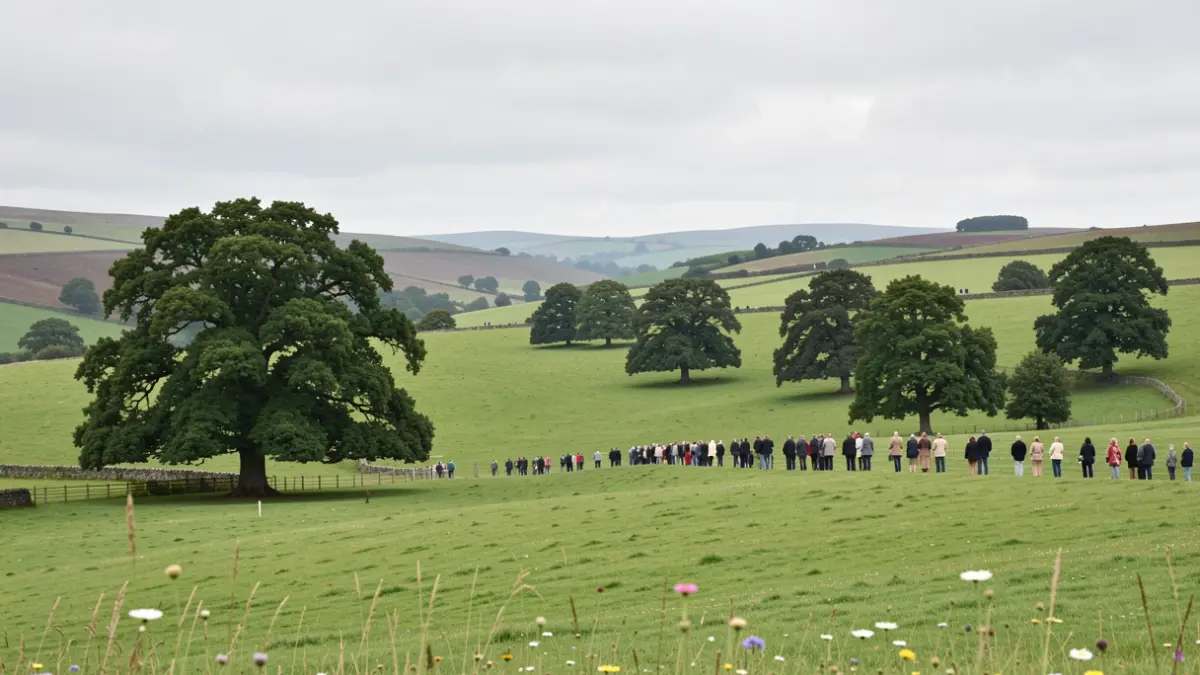
Rolling green hills of the South Downs National Park with scattered trees and wildflowers.
A pioneering project in the New Forest and South Downs National Parks is monitoring how climate change is affecting the seasonal rhythms of nature, with initial results showing key species emerging earlier in spring.
The Nature’s Changing Seasons in National Parks project is investigating the effects of climate change on the timing of natural events, such as leafing, flowering, and insect emergence, within the New Forest and South Downs National Parks. This initiative aims to provide insights into how species are responding to a warming climate, with the potential for wider application across the UK's protected landscapes.
Phenology, the study of recurring natural events, is central to the project. It combines long-term public observations from the Woodland Trust’s Nature’s Calendar platform with temperature data from the Met Office and local expertise. The project identified 24 priority species, including birds, butterflies, wildflowers, and trees, with eight showing particular sensitivity to warmer spring temperatures in southeast England. These include blackthorn, horse chestnut, silver birch, oak, and the brimstone, peacock, and holly blue butterflies, alongside the bluebell wildflower.
Initial findings indicate that these sensitive species are already emerging earlier in spring in response to warmer years. Projections suggest that a further 1°C increase in temperature could lead to the holly blue butterfly emerging approximately seven days earlier, and a 2°C rise could advance emergence by around 14 days. Across all analysed species, an additional 2°C of warming could bring spring emergence forward by nine to 19 days.
The disruption of these delicate seasonal timings can have significant ecological consequences. When species' timings become mismatched, it can affect stable populations. For instance, insects may emerge before birds need them for feeding chicks, or flowers might bloom before their pollinators are active.
“
"Changes in phenology have been identified in a recent report about climate risks and adaptation opportunities for the New Forest as being a key climate change risk to this landscape. Tracking these changes in seasonal patterns helps us understand and prepare for the effects of climate change."
John Stride, Net Zero with Nature Programme Manager at the New Forest National Park Authority, highlighted that phenological changes are a key climate risk for the landscape, and tracking these shifts aids in understanding and preparing for climate change impacts. He added that the work translates complex data into clear insights for conservation and land management.
“
"This project demonstrates the value of bringing together climate data, scientific expertise and observations from people on the ground to understand how nature is responding to a changing climate."
Jessica Stacey, Senior Climate Scientist at the Met Office, emphasised the project's success in integrating climate data, scientific expertise, and public observations. She noted the potential for the approach to be scaled across other Protected Landscapes throughout the UK with further investment.
“
"We are already seeing the impacts of recent heatwaves through the early leaf tinting of many trees and shrubs. Leaf tinting is one of the events recorded by our Nature’s Calendar volunteers, and observing these kinds of changes is invaluable to helping scientists understand the impacts of weather and climate."
“
"It’s important we understand both the short-term and extended effects on nature and natural processes. That’s why this project is so timely. It’s been great to work with project partners to help us see how this plays out across the South Downs National Park."
The project is a collaboration involving the Met Office, Landscape Observatory, National Parks Partnerships, the Woodland Trust, the South Downs National Park Authority, and the New Forest National Park Authority, with funding from The Estée Lauder Companies UK & Ireland and the South Downs National Park Authority.
The public can contribute to tracking seasonal changes by recording their observations through the Nature’s Calendar platform, helping to build evidence for understanding nature's response to climate change and supporting the project's expansion.