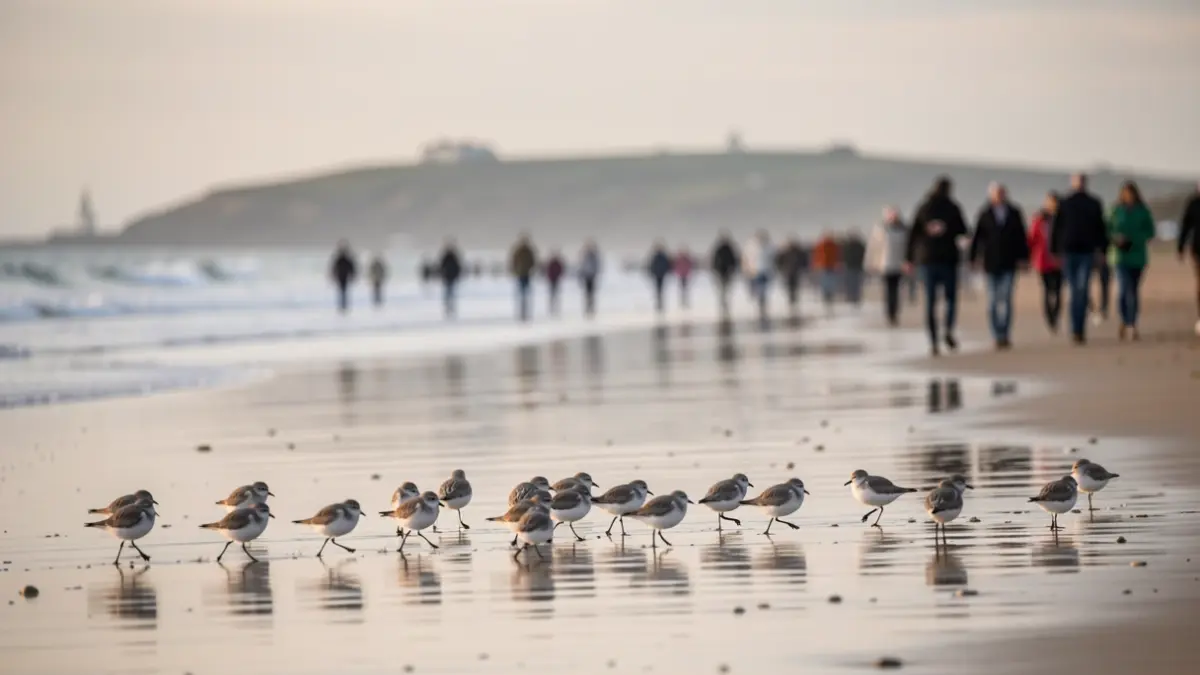
Tiny shorebirds, the sanderlings, undertake a migration of thousands of miles from their Arctic breeding grounds in Siberia and Greenland to spend the winter months on the Isle of Wight. The coastline between Ryde and Seaview serves as a crucial feeding and resting site for these birds, alongside other protected species such as brent geese, curlews, oystercatchers, and ringed plovers.
Recent years have seen a decline in sanderling numbers, with human and canine disturbance making it increasingly difficult for the birds to rest and feed undisturbed. In response, a voluntary Bird Protection Area has been established near the Hovertravel terminal in Ryde. Visitors are kindly requested to avoid this specific area between September and April, coinciding with the birds' peak presence.
The Sanderling Recovery Project, spearheaded by The Common Space in partnership with Bird Aware Solent, Ryde Town Council, the Isle of Wight Council, and Natural England, is actively deploying new signage, information boards, leaflets, and educational resources. These initiatives aim to foster greater public understanding and support for the birds' conservation.
Individuals can contribute by observing sanderlings and other coastal birds from a respectful distance, adhering to the voluntary exclusion from the Bird Protection Area at Ryde between September and April, and by sharing their sightings with Bird Aware Solent.
Organisers are also urging residents and visitors to share information about these remarkable birds and the critical role that Ryde and Seaview play in their survival. Through collective effort, the community aims to ensure that future generations can witness the spectacle of sanderlings racing along the shoreline, and that increasing numbers of these cherished winter visitors return to the Isle of Wight annually.