A new four-year project, named ADAPT (Assessing Drought Adaptation of Productive Trees), aims to understand which tree species are most resilient to drought and best suited for anticipated future climates in Britain. This initiative combines cutting-edge sensor technology with existing experiments, launched against a backdrop of increasing extreme weather events.
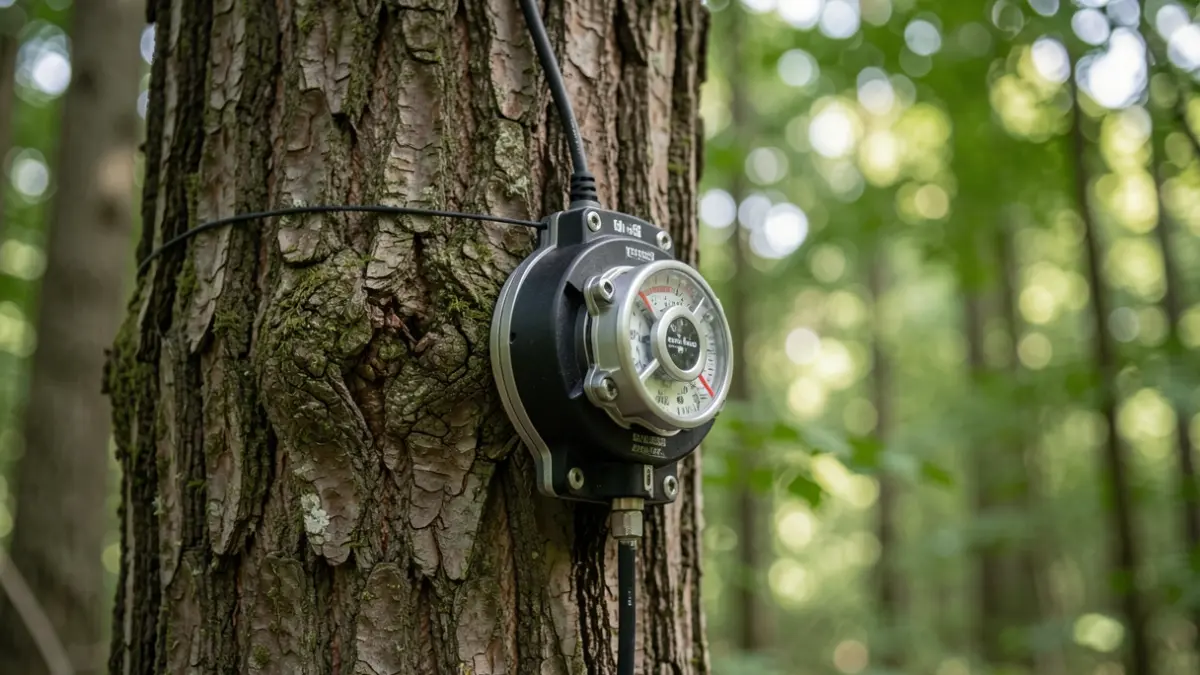
Scientists have deployed a new national tree growth and stress monitoring network, featuring sensors called dendrometers on 355 trees across 12 species in five experiments nationwide. These sensors record data every 30 minutes, providing detailed insights into tree growth rates, drought stress responses, and recovery.
The project will also assess how drought responses affect sub-canopy microclimates by tracking CO2, temperature, humidity, light, and airflow. Additionally, researchers will analyse 100 years of climate data to understand changing drought event dynamics across the UK.
Westonbirt, The National Arboretum, serves as a key site for the project, hosting experimental sites and acting as a flagship location for public engagement. The research aims to inform land managers and policymakers on planning for a more drought-prone future.